OT supervsion
Supervision at Kintsugi OT is practical, reflective and grounded in real world clinical complexity.
Nic provides supervision for:
• Occupational Therapists working with neurodivergent adults.
• Neurodivergent clinicians across disciplines including OT, Speech Pathology, Psychology and Dietetics.
• Clinicians building sustainable careers or solo private practices in healthcare.
Sessions are thoughtful, structured and focused on clarity rather than performance.
If you would like to explore supervision, you are welcome to book a discovery call.

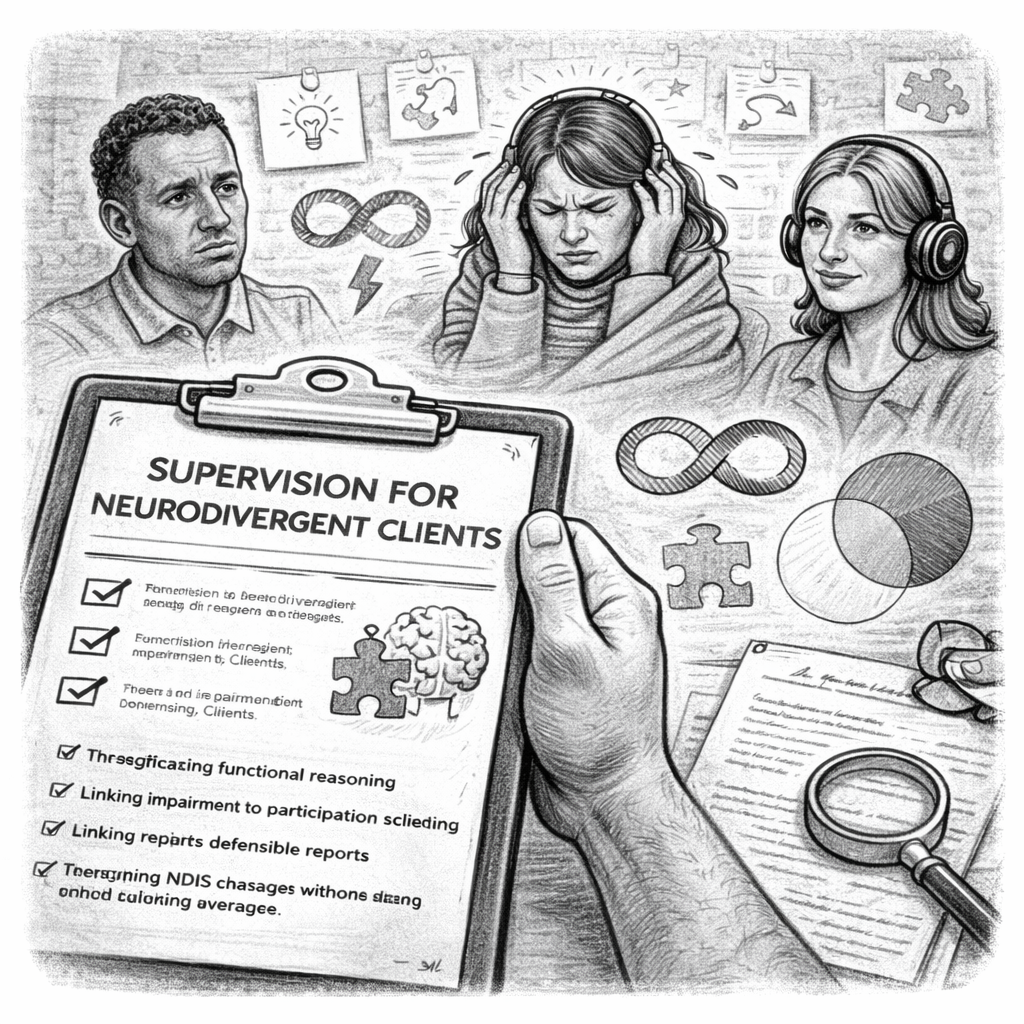
Supervision for Clinicians Working With Neurodivergent Clients
Working with autistic and otherwise neurodivergent adults requires nuanced clinical reasoning. Masking, shutdown, sensory load, trauma history and invisible functional impacts are often misunderstood or minimised in standard models.
Supervision focuses on:
• Strengthening functional reasoning.
• Linking impairment to real world participation.
• Writing clearer, defensible reports.
• Navigating NDIS language without losing neuro affirming principles.
• Managing complex presentations with confidence.
This is not checklist supervision. It is depth focused and clinically rigorous.
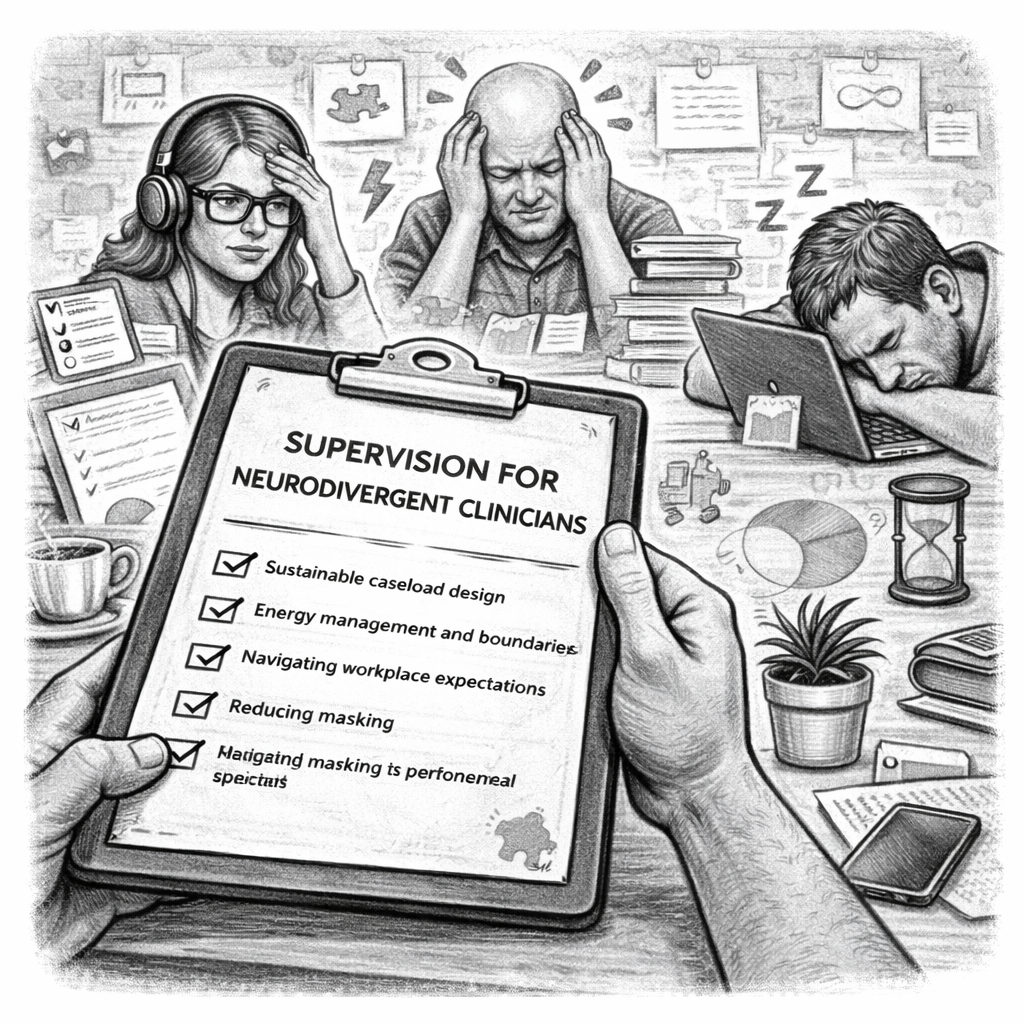
Supervision for Neurodivergent Clinicians
Many neurodivergent clinicians are highly capable yet exhausted.
Supervision in this space recognises sensory load, communication preferences, processing differences and fluctuating capacity. We explore:
• Sustainable caseload design.
• Energy management and boundary setting.
• Navigating workplace expectations.
• Reducing masking in professional contexts.
• Building a career that fits your nervous system.
You do not need to “push through” to be competent.
If you are unsure whether this space is right for you, feel free to reach out.
Sustainable Practice and Career Design
Healthcare can quietly reward overextension.
We can work on:
• Building a sustainable private practice.
• Designing a low burnout clinical schedule.
• Structuring telehealth and in person work.
• Creating clear referral boundaries.
• Developing long term career sustainability.
The goal is not hustle. The goal is longevity.